TEST # 1 - CIRCUMFERENCE
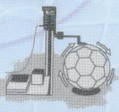 The circumference of ball must be
the same all round so that is can predictably. The diameter of ball is
measured at 10 different points and the mean circumference is taken. The mean
calculated must lie with in the range 68.0 - 70.0cm, inclusive. The circumference of ball must be
the same all round so that is can predictably. The diameter of ball is
measured at 10 different points and the mean circumference is taken. The mean
calculated must lie with in the range 68.0 - 70.0cm, inclusive.
|
TEST # 2 - ROUNDNESS
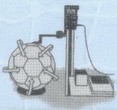 A slightly uneven seam can change
the ball shape by a fraction. In this test the diameter of the ball is
measured at 16 points and the mean diameter is calculated. The difference
between the highest and lowest diameter must not be more than a percentage of
the mean diameter. i.e.2% A slightly uneven seam can change
the ball shape by a fraction. In this test the diameter of the ball is
measured at 16 points and the mean diameter is calculated. The difference
between the highest and lowest diameter must not be more than a percentage of
the mean diameter. i.e.2%
|
TEST # 3 - REBOUND
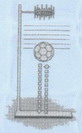 The ball is dropped 10 times on a
steel plate from a height of 2 meters. It must bounce between 115 - 165cm
inclusive. The difference between the highest and lowest bounces must not be
more than 10cm. The ball is dropped 10 times on a
steel plate from a height of 2 meters. It must bounce between 115 - 165cm
inclusive. The difference between the highest and lowest bounces must not be
more than 10cm.
|
TEST # 4 - WEIGHT
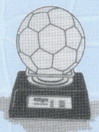 Each ball is weighed 3 times on a
bean balance in a sealed cabinet. The cabinet is sealed to prevent droughts
affecting the measurement. Balls should weigh between 410 - 450grams,
inclusive. Each ball is weighed 3 times on a
bean balance in a sealed cabinet. The cabinet is sealed to prevent droughts
affecting the measurement. Balls should weigh between 410 - 450grams,
inclusive.
|
TEST # 5 - WATER ABSORPTION
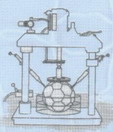 This test turns and squeezes the
ball in a tank of water 250 times. Balls must not absorb more water that adds
15% to its initial weight. This test turns and squeezes the
ball in a tank of water 250 times. Balls must not absorb more water that adds
15% to its initial weight.
|
TEST # 6 - LOSS OF PRESSURE
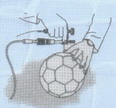 A ball which loses pressure during
a game is difficult to predict and performs erratically. For this test the
ball is inflated to pressure of 1.0 bar and in 72 hours must lose no more than
25% of air. A ball which loses pressure during
a game is difficult to predict and performs erratically. For this test the
ball is inflated to pressure of 1.0 bar and in 72 hours must lose no more than
25% of air.
|
TEST # 7 - SHAPE & SIZE RETENTION
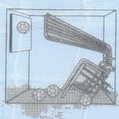 In this test the ball is fired
2,000 times against a steel plate at 35 miles an hour. The seams and air
valves must be undamaged, and the loss of pressure, or deviation in the ball's
circumference and roundness, must be minimal. In this test the ball is fired
2,000 times against a steel plate at 35 miles an hour. The seams and air
valves must be undamaged, and the loss of pressure, or deviation in the ball's
circumference and roundness, must be minimal.
|

